Blog

A Portal to the Past: Into The Office

When designing a space for high-stakes decisions, modern architecture often leans toward minimalism—glass walls, sterile surfaces, and sharp lines. But there is a different kind of luxury found in spaces that contain a great piece of history.

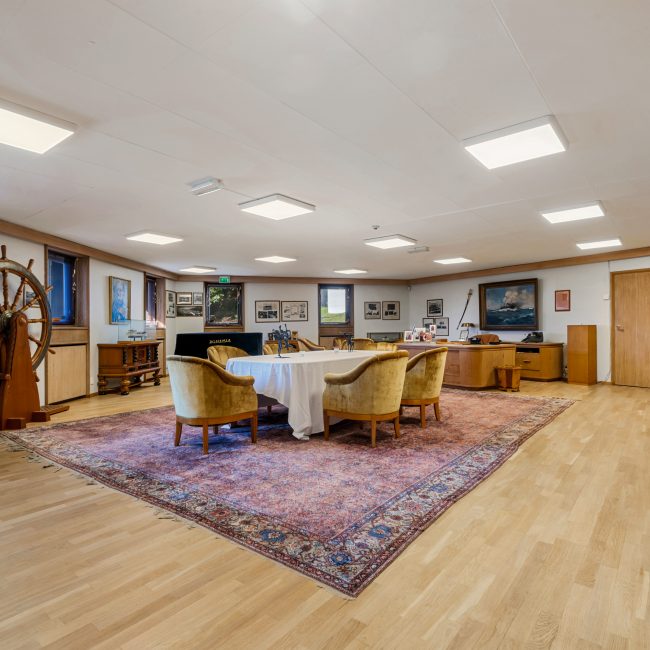
Inside Rasmussen Samlingene, there is a room that takes you back to that vibe; that time to the 1930s.

This is The Office, originally designed to be shipping magnate Hilmar Reksten’s private executive sanctuary. Today, the room remains one of Bergen’s most exclusive hidden gems, a perfectly preserved masterclass in 1930s interior architecture that continues to inspire those who step inside.

The Art of the Workspace

The Office was built with a clear purpose: to bridge the vast world of global business with the refined life of an art connoisseur. Originally constructed in 1935 as an extension of the stately grey villa, every architectural element was deliberately chosen to cultivate a palpable sense of authority. The room’s orientation alone speaks to this intention, from the primary desk, the windows offer a direct view toward Gamlehaugen, the royal residence of Bergen, visually connecting its occupant to the city’s most prestigious landmark.

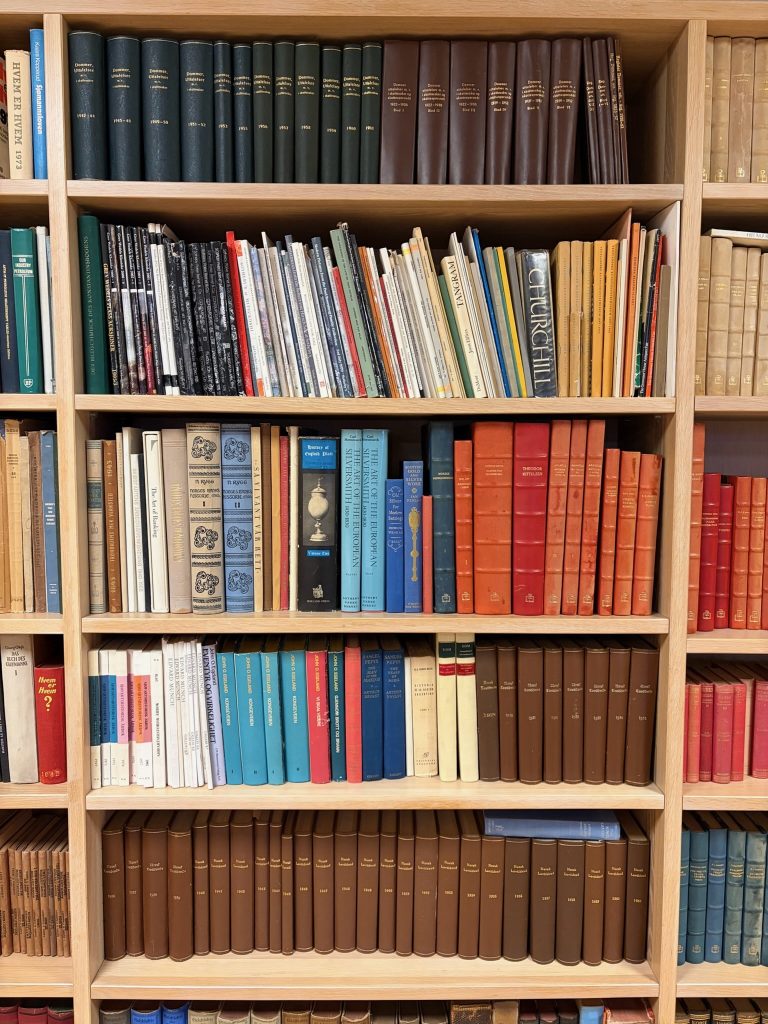
  • Custom wooden shelving holds an expansive library where art history and maritime law sit side by side, while the floor carries a rare Oriental carpet from one of the most significant collections in Northern Europe. It is a space where high-level strategy and aesthetics coexist and harmonise.
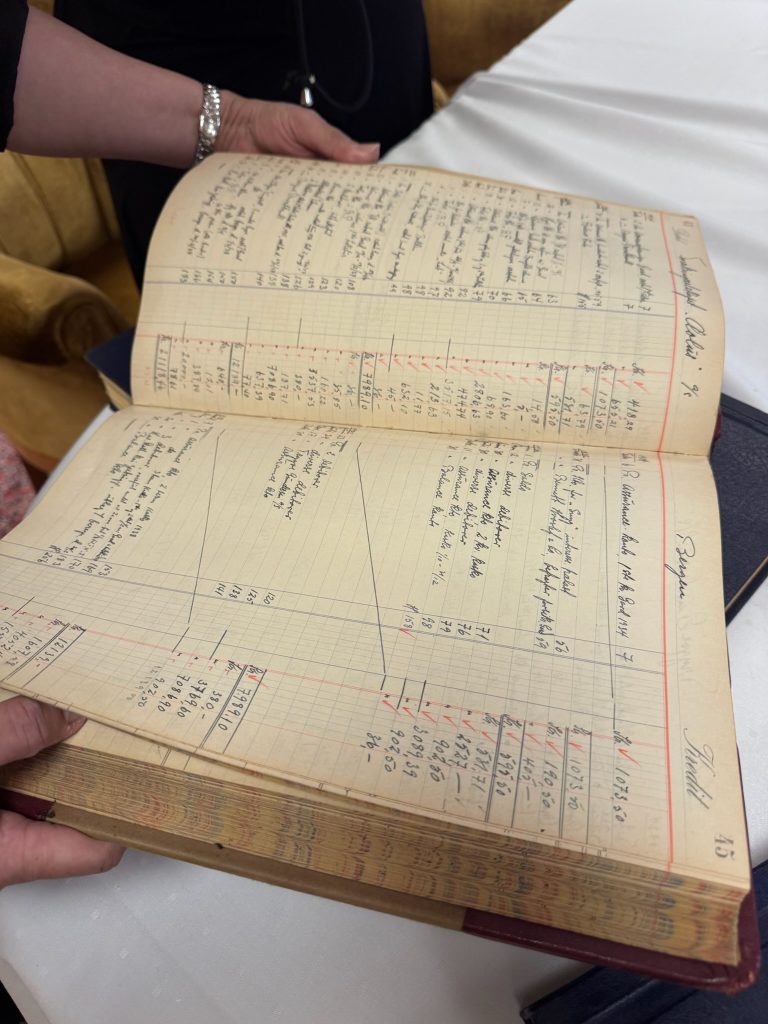
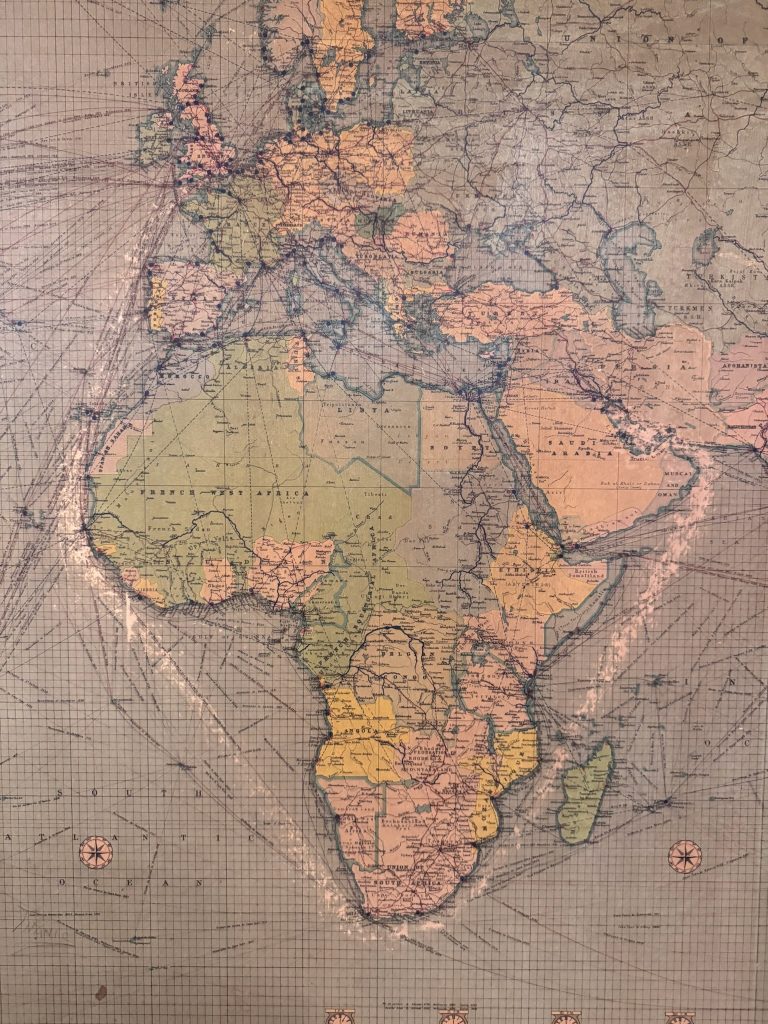
  • The original planning maps still lie as Reksten left them, ink markings intact, alongside handwritten ship logs recording voyages that once crossed hemispheres. These are the physical remains of an era when global networks were mapped out entirely by hand, right from this desk.
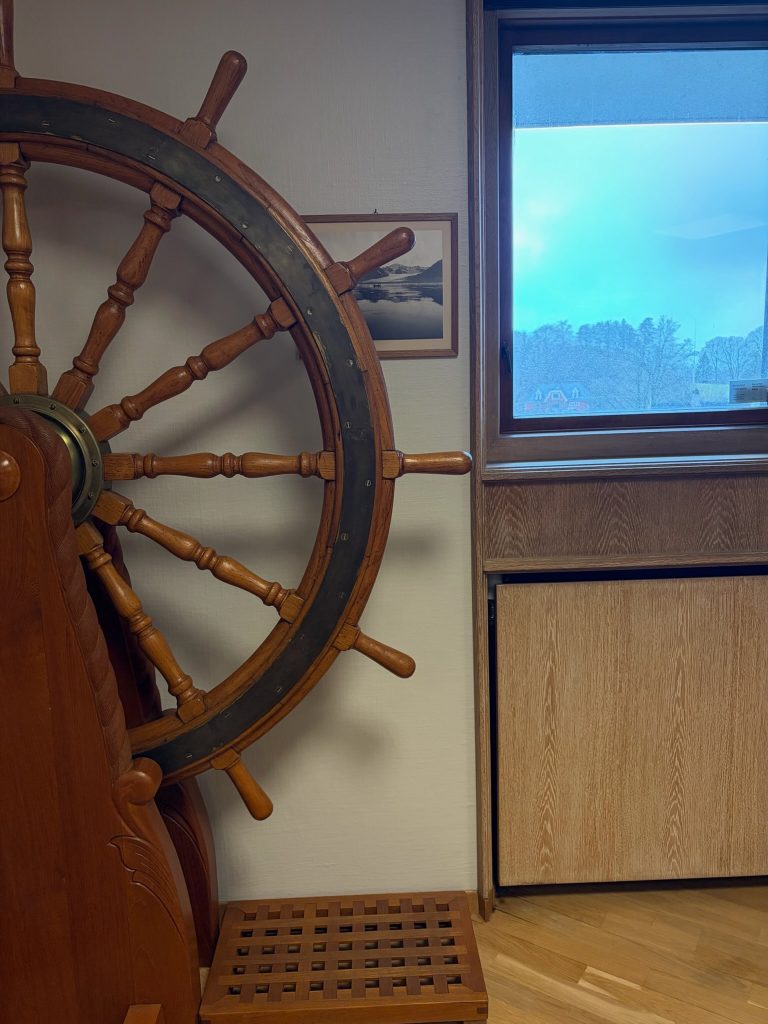
  • A monumentally preserved ship’s steering wheel anchors the room with the physical presence of the sea itself, as a reminder that everything decided here was ultimately bound for open water.

A Legacy Rescued and Preserved

The true value of the Office lies in its uncompromising authenticity. Following the global shipping crises of the 1970s, much of the surrounding estate’s asset base was dispersed. However, out of profound respect for the building’s lineage, Rasmussen Samlingene intervened to protect the office’s original character.
By reacquiring the original furniture, the grand pianos, and the rare carpet collection, we have ensured that the room’s soul remains entirely intact. It stands today as an unbroken link to the 1930s, retaining a character as formidable as it was nearly a century ago. The Office offers an atmosphere of timelessness and prestige that modern design simply cannot replicate.
The Office depicts an important chapter in Bergen’s history where the ambitions of an extraordinary man still resonate. Before you leave the gallery, we recommend taking the small stone path in the park just outside. It leads to a peaceful memorial built into the rock wall where Reksten’s urn rests. It is a beautiful, still place to reflect on the man who dedicated his life to his business and to art.

From Historical Workspace to Modern Boardroom

While The Office functions beautifully as an authentic museum space, it was never meant to be frozen in time. A room built for ambition should be used by those with ambition.
Today, The Office is open for private hire, transforming it into Bergen’s most unique venue for high-level board meetings, executive retreats, and intimate private dinners.
When you host a meeting here, you aren’t just renting a table and chairs. You are immersing your team, your clients, or your board of directors in an atmosphere of quiet grandeur. Sitting on the original textiles, surrounded by world-class art and history, the room naturally elevates the conversation, inspiring the kind of bold, strategic thinking that built empires.


Reading time:

Share:

Stay in the loop:

Subscribe to our newsletter for more art stories.

Stay in the loop

Exhibitions, events and stories from Bergen’s cultural centre.
Blog

In Conversation with Guttestreker

Guttestreker is a Norwegian artist duo formed by Petter Malterud Grøndahl and Christoffer Kroge Christensen. Since coming together in 2015, they have established themselves as one of the most recognised voices in contemporary Norwegian art.

Their work is visually striking and richly layered, melding art, history, and science to spark conversations about human behaviour and the world we live in.

In this conversation, art collector Sofie sits down with Petter and Christoffer to discuss the duo’s early beginnings, their collaborative artistic process, and the unique inspirations that shape their work. They also offer exclusive insight into Substance City, one of the works in our collection, and the ideas that brought it to life.

Reading time:

Share:

Stay in the loop:

Subscribe to our newsletter for more art stories.

Stay in the loop

Exhibitions, events and stories from Bergen’s cultural centre.
Blog

Exploring the Sculpture Hall: A Tribute to Per Ung

Known as the "People’s Sculptor," Per Ung spent a lifetime translating the Norwegian spirit into tangible, breathing forms.

In our dedicated sculpture hall, his legacy finds a permanent home. A space where history and artistry meet to tell a story of human vulnerability and strength.

Stepping into this hall at Rasmussen Samlingene is more than a gallery visit; it is an immersion into the life’s work of a man who shaped the very visual identity of modern Norway. This dedicated space serves as our homage to Per Ung (1933–2013), an artist who shaped the visual identity of modern Norway.  While our collection features global icons, this hall is the heart of our local heritage, celebrating a master who refused to let the classical human form fade into the background of the 20th century. Ultimately, his work serves as a powerful reminder of the “shelter for human consciousness,” shifting the focus away from outward appearances to the deep, internal lives of his subjects.


A Life Dedicated to the Norwegian Spirit

Per Ung’s life was dedicated to the Norwegian spirit, and his contribution to the nation is felt most powerfully in the streets of our cities where his public monuments stand. 

As the “People’s Sculptor,” he possessed a rare gift for capturing national icons, from the theatrical grace of Johanne Dybwad to the athletic energy of Sonja Henie, securing his place at the heart of Norway’s public consciousness.

 By studying under both the traditionalist Per Palle Storm and the modernist Anthony Caro, Ung effectively bridged the gap between old-world mastery and a fresh, modern sensibility. This immense cultural impact was formally recognised in 2007 when he was appointed Knight 1st Class of the Order of St. Olav.

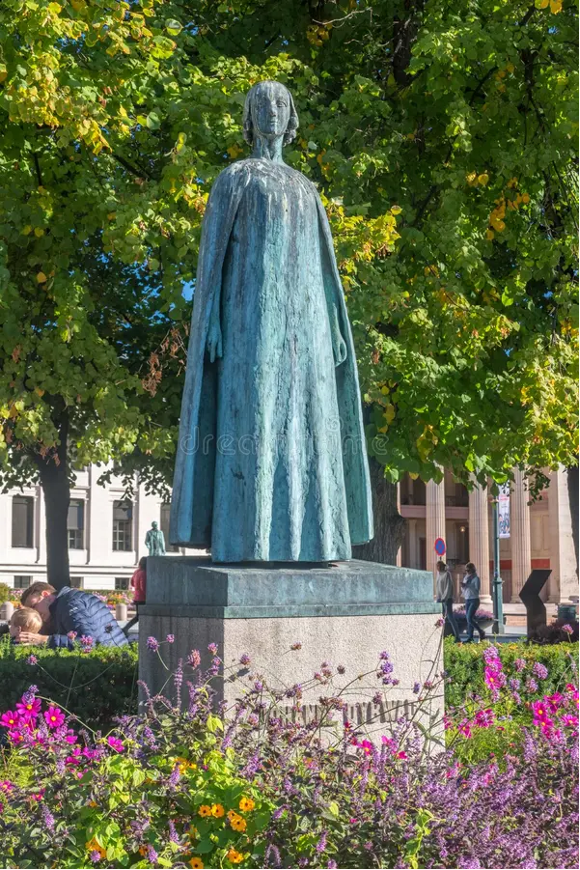
Johanne Dybwad by Per Ung


The Power of the Material: Bronze and Bone

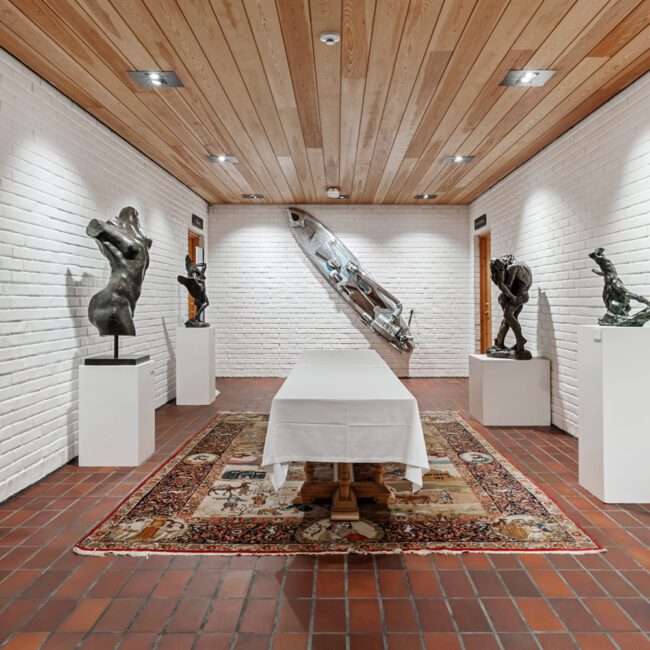
The hall highlights Per Ung’s absolute mastery of bronze, a medium he utilised to give physical weight to the intangible. Each sculpture in the space is carefully curated to showcase his ability to fill a room with movement and emotion. These forms seem alive on their plinths as they appear to breathe, struggle, and reflect.


A Hall for Reflection

By dedicating this hall to Per Ung, Rasmussen Samlingene ensures that his contribution to Norwegian art remains in living dialogue. It is an active space where Ung’s sculptures continue to fulfill their original purpose: to connect us with our shared humanity. Visitors are invited to experience the depth and energy of his artistry first-hand. The hall’s design allows for intimate encounters with each piece, encouraging visitors to circle the works, to observe how light transforms bronze throughout the day, and to discover new details with each viewing. It is a place for sharing and networking, easily adapted to the ambient atmosphere of quiet reflection or meaningful discussion.

We invite you to stand amongst these bronze masterpieces and let them speak to you, as they have to generations of Norwegians before.  You’ll discover why the “People’s Sculptor” earned his title, and why his voice continues to resonate so powerfully in the story of Norwegian art. This hall stands as our commitment to preserving sculptures, and the enduring conversation between artist, subject, and viewer that Per Ung so masterfully orchestrated.

Reading time:

Share:

Stay in the loop:

Subscribe to our newsletter for more art stories.

Stay in the loop

Exhibitions, events and stories from Bergen’s cultural centre.
Blog

Inger Sitter and the Birth of Norwegian Abstract Art

Imagine a young artist, barely a teenager, stepping into the hallowed halls of the Oslo National Academy of Fine Arts – the youngest student ever admitted.

This was Inger Sitter, born in Trondheim in 1929, a prodigious talent whose early years hinted at a remarkable journey. But who could have predicted that this young woman, grounded in classical training, would become the powerful force to shatter Norway’s artistic conventions and lead it into the realm of abstraction?

Sitter’s early education spanned continents, from the structured lessons in Antwerp, Belgium, where she spent part of her childhood, to the Parisian studio of André Lhote. She honed her skills, mastering the techniques of figurative representation. Yet, a restless spirit simmered beneath the surface, yearning for a language beyond the literal, a way to capture the essence of experience rather than just its appearance.

The Turn Towards the Unseen

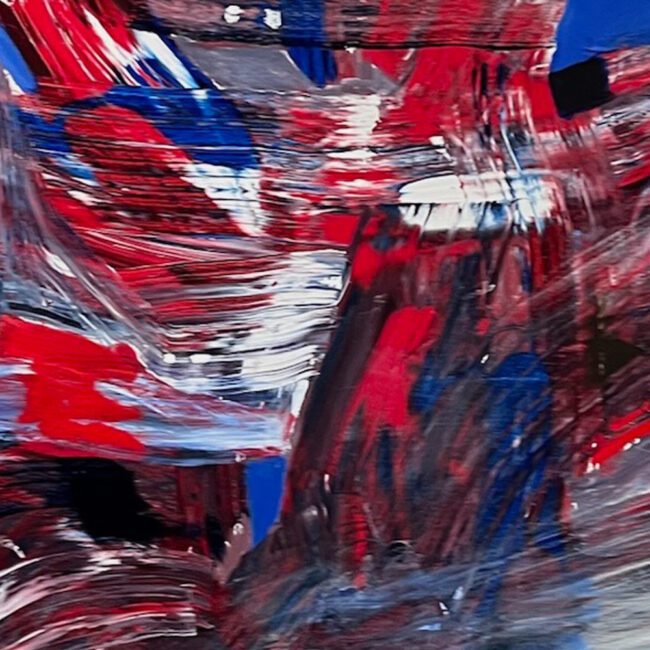
Post-war Norway was ripe for change, but its art scene largely remained tethered to tradition. It was here that Inger Sitter, with audacious vision, began to forge a new path. She wasn’t just dabbling in abstraction; she was actively pioneering a movement. Her canvas became a battleground for ideas, a space where form dissolved, and emotions took precedence.

Her signature style, Lyrical Abstraction, wasn’t an escape from reality, but rather a deeper engagement with it. 

Sitter found her profound inspiration not in urban bustle or human drama, but in the raw, elemental power of nature. Think of the Norwegian coast – the relentless rhythm of the waves, the ancient, weather-beaten rocks by the shore near her home in Tjøme. These weren’t merely landscapes to be depicted; they were forces to be felt, absorbed, and then translated into vibrant colour and dynamic form.

“When I paint,” one can imagine her saying (or feeling), “I’m not painting a rock. I’m painting the feeling of the rock’s age, the force of the sea against it, the memory of wind-sculpted granite.” Her canvases pulsed with an organic energy, a direct echo of the natural world, expressed through fluid brushstrokes and an intuitive dance of colour.

Beyond the Canvas: A Champion for Artists

Sitter’s impact wasn’t confined to her studio. She was a woman of fierce conviction, deeply engaged in the social and political landscape of her time. Recognising the struggles of fellow artists, she became a tireless advocate, campaigning for better working conditions, public funding, and greater recognition for the arts. 

Her groundbreaking appointment as the first female professor at the Norwegian National Academy of Fine Arts in 1981 was not just a personal triumph, but a powerful statement about the evolving role of women in the arts.

From monumental public commissions, like her powerful wall decorations for the Government building in Oslo in the 1950s or the stunning 32-meter frieze for the 1994 Winter Olympics in Hamar, to intimate graphic works, Inger Sitter’s art permeated public and private spaces alike. Each piece, whether grand or subtle, carried the unique imprint of her journey – a bridge between the visible and the felt.

Inger Sitter, who left us in 2015, didn’t just paint pictures; she painted possibilities. She taught a nation to see abstraction not as a void, but as a gateway to deeper understanding, proving that the most profound stories can sometimes be told without a single recognisable figure, but with the boundless, lyrical energy of a true pioneer.

Reading time:

Share:

Stay in the loop:

Subscribe to our newsletter for more art stories.

Stay in the loop

Exhibitions, events and stories from Bergen’s cultural centre.
Address
Statsminister Michelsens veg 34
5230 Paradis, Bergen
Opening hours
Wednesdays 17:00 – 20:00
Sundays 12:00 – 16:00
Contact
920 24 724